Contact Us

Use the form on the right to contact us.

You can edit the text in this area, and change where the contact form on the right submits to, by entering edit mode using the modes on the bottom right. 

Form Block
This form needs a storage option. Double-click here to edit this form, and tell us where to save form submissions in the Storage tab. Learn more
         

123 Street Avenue, City Town, 99999

(123) 555-6789

email@address.com


You can set your address, phone number, email and site description in the settings tab.
Link to read me page with more information.

Corporate Offer - Cycle Hub

Eccles Metrolink line to close for major summer repair work

Guest User
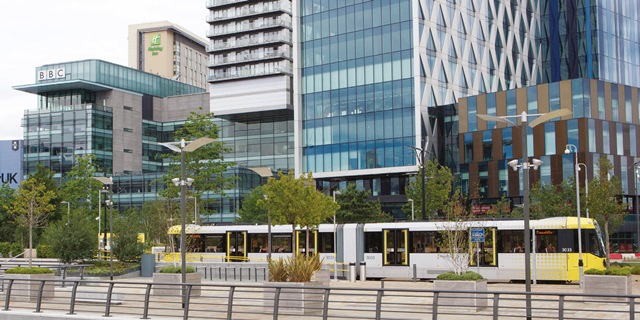
A major track replacement programme will see the Eccles via MediaCityUK Metrolink line temporarily close this summer.

A major track replacement programme will see the Eccles via MediaCityUK Metrolink line temporarily close this summer.

Some sections of track on the Eccles line are now showing significant wear, particularly on sections of curved rail situated within the highway.

Transport for Greater Manchester (TfGM) has worked with Metrolink’s operator and maintainer, MRDL, to time the essential upgrades to coincide with final works at St Peter’s Square stop, when fewer people will be travelling due to the summer holiday period.

In order to complete the work as efficiently as possible, the Eccles line will close from Sunday 26 June, on the same date services will stop running through St Peter’s Square.

Eccles line services are expected to resume between Deansgate-Castlefield and MediaCityUK in early August, with the full line reopening at the end of August. Train services from Eccles and Patricroft rail stations to/from the city will operate as normal.

This summer will also see the final phase of work to build a new, much larger St Peter’s Square stop, set to open at the end of August.

Peter Cushing, TfGM Metrolink Director, said: “Unfortunately several sections of rail on the Eccles line are showing signs of significant wear.

“By replacing longer sections of track on the Eccles line now, the work will ensure a longer overall lifespan for the tram line in these areas and minimise the potential for future roadworks affecting all road users.

“To limit the impact on customers we’ve worked with Metrolink’s operator and maintainer, MRDL, to get this essential work done at the same time as St Peter’s Square works, with fewer passengers affected due to the quieter summer holiday period.

“A full bus replacement service will be in operation and we are speaking to residents and businesses right along the route to keep them fully informed of the work that is being done.

“While there will inevitably be some disruption, by coordinating and delivering both projects simultaneously we hope to minimise the overall impact this will have.”

As the final works to complete the St Peter’s Square stop will take place close to the track, Metrolink services through the square will be suspended from Sunday 26 June to the end of August, meaning no north/south cross-city tram services will operate.

Throughout the work, replacement bus services and signed walking routes will ensure customers have good access across and into Manchester city centre, with bus replacement services calling at key destinations along the Eccles line.

Peter added: “This is an exciting time for Metrolink with some historic changes on the way for St Peter’s Square. We’re just months away from opening up a new, much bigger stop that will be a game-changer for city centre services when the new Second City Crossing opens early next year.

“We can’t complete the stop without full access to the work site and, as we set out last year, that means no tram services through the square approximately nine weeks.

“Last summer we made similar changes to services so we’re confident we’ll provide the right mix of replacement bus services and information to support our customers through this time.

“Thanks once again to all our passengers for bearing with us as we work to improve the service we provide. I’m sure they’ll be impressed with the results at St Peter’s Square.”

The transformation of St Peter’s Square is part of a city centre stop improvement programme that has seen a new stop built at Exchange Square, multi-million pound revamps of Deansgate-Castlefield and Victoria stops, and improvements at Market Street stop.

The stop will have two new island style platforms and two sets of track in each direction, allowing more services to run through it on the existing lines and the new Second City Crossing.

The Second City Crossing and stop improvements programme is part of GROW, which will see more than £1 billion invested in city centre infrastructure improvements by 2017. Find out more at www.manchester.gov.uk/grow.

For more information on Metrolink transformation work please visit www.transformationinformation.co.uk, email future.metrolink@tfgm.com or call 0161 244 1555 (office hours).

The School Run

Guest User

The school journey is a perfect opportunity for children to learn about their local area, develop wider social networks and gain independence.The average primary school journey is just 1.5 miles, and yet one in five cars on the road during the morni…

The school journey is a perfect opportunity for children to learn about their local area, develop wider social networks and gain independence.

The average primary school journey is just 1.5 miles, and yet one in five cars on the road during the morning peak are doing the school run.

Encouraging children to walk, cycle and scoot will reduce congestion and pollution around the school gates. It will also help your child’s mental and physical health. Teachers find that pupils who walk and cycle arrive at school more relaxed, alert and ready to start the day than those who travel by car.

Cycling to school

Nearly half of children surveyed by Sustrans in 2010 wanted to cycle to school but only 4% were allowed to. The biggest concern of adults when it comes to children walking and cycling to school is traffic danger.

To read the article in full with further details on children's cycling safety - click here.


Millions of car journeys abandoned as children jump on their bikes

Guest User

Children across the UK are jumping on their bikes and scooters over the next two weeks in an attempt to reduce 70 million balloons worth of carbon dioxide from being released into the atmosphere.

Parents and teachers will leave their cars at home for their normal trips to and from school, preventing over 2 million car journeys from taking place. Instead they will be cycling and scooting over 3 million miles during the Big Pedal, a two week cycling and scooting competition run by charity Sustrans.

The competition could save over three tonnes of Nitrogen Oxides and over 1,000 tonnes of CO2 from being emitted into the environment as part of the school run.

Nitrogen Oxides can cause breathing difficulties in vulnerable people, such as asthmatics and older adults.

As well as reducing pollution which affects us all the Big Pedal can also help reduce individuals’ exposure to pollutants. Reports have shown that children who travel actively could reduce their exposure to Nitrogen Oxides by up to 60% as concentrations are higher inside the vehicle than outside.

Jason Torrance, Policy Director at Sustrans, said: “Over 40,000 people die each year in the UK directly because of air pollution and it is simply unacceptable.

“The Big Pedal demonstrates the difference that can be made if people are encouraged to leave their cars at home. Not only will they get fitter and healthier by cycling and scooting, dangerous emissions are reduced, which benefits everyone.

“To make this happen on a large scale the government must transform our towns and cities into places where cycling and walking is the natural choice for journeys to school and work. Only by doing this can we hope to prevent the thousands of deaths caused by air pollution and at the same time make the nation healthier.”

As well as providing environmental and health benefits, the Big Pedal also enables parents and teachers to save money, last year collectively over £475,000 was saved in fuel costs by people cycling and scooting, instead of driving during the competition.

Over 1500 schools, containing over half a million children, are taking part in the Big Pedal which is running between 18th and 29th April. For more information on the event or for tips on cycling and scooting to school, visit www.sustrans.org.uk/bigpedal

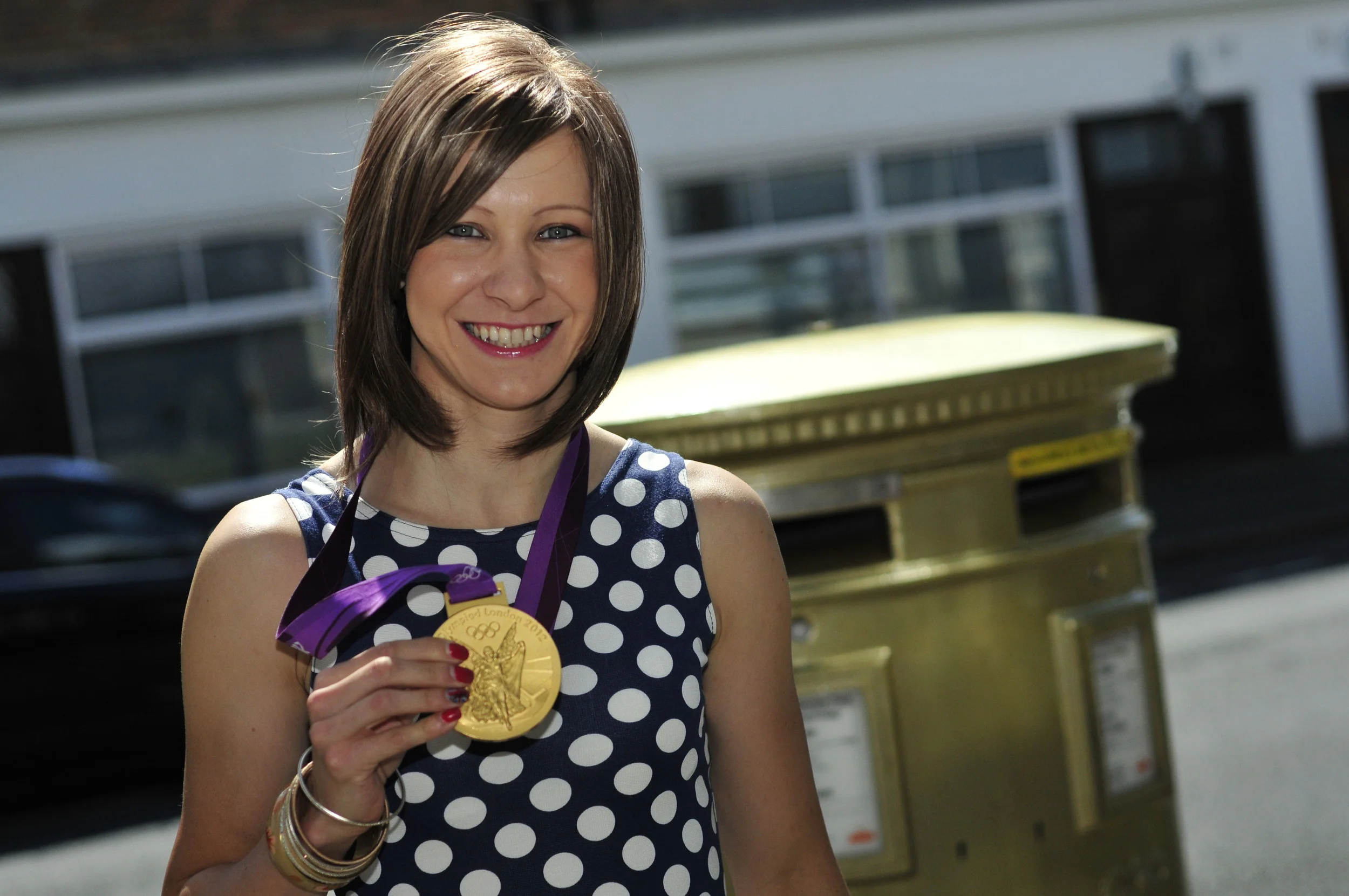
Gold medal winning cyclist Joanna Rowsell Shand backs Sustrans’ Big Pedal

Guest User

London 2012 gold medallist, Joanna Rowsell Shand, is calling on schools up and down the country to encourage children to get on their bikes and scooters this Spring by signing up to the Big Pedal.

Over 1,280 schools, with more than 400,000 pupils, across the UK have so far signed up to the annual inter-school competition which will take place between 18th and 29th April. Run by charity Sustrans and funded by the BikeHub, the Big Pedal sees schools compete to see who can record the greatest number of pupils, staff and parents cycling and scooting to school.

Now Joanna Rowsell Shand is urging more schools to sign up to the competition. Taking time out of her training schedule ahead of the Rio 2016 Olympics, she said:

“Cycling is a great way to keep fit and healthy and the Big Pedal is a fantastic way to start commuting by bike.

“It’s brilliant that so many schools have signed up to the Big Pedal. With over a month to go I’m calling on schools around the country to sign up and be part of the UK’s biggest school cycling and scooting event.”

Schools from up and down the UK have signed up, from as far south as Penzance and as far north as the Shetland Islands.

Ben Merry, Senior Project Officer, Primary Education at Sustrans, said: “Joanna was part of those magical few weeks during London 2012 that inspired millions of people to become active. We’re honoured she’s backing the Big Pedal and hope it encourages even more schools to take on the challenge.”

It’s not too late to get involved, for more information about the Big Pedal visit the Sustrans website www.sustrans.org.uk/bigpedal

370 Skyscrapers of CO2 saved by Londoners on bikes every year

Drumbeat

Cycle journeys in London save the equivalent annual carbon emissions of 82,000 cars; that much CO2 would fill London’s Gherkin building 370 times.

As the historic UN international climate talks drew to a close in Paris, Sustrans reveal the massive greenhouse gas savings made by people cycling here in the capital.

New evidence from Sustrans London shows that over 260,000 tonnes of greenhouse gases were saved from cycling journeys made in London in 2014.

Figures shared by the charity who created the National Cycling Network 20 years ago, show the estimated number of cycling trips in London increased to over 222 million in 2014.

Commenting on the findings, Matt Winfield, Acting Sustrans London Director, said:

“When it comes to tackling transport emissions here in London, it’s clear that cycling is one of the best investments the new Mayor can make.’

“Cycling numbers are growing rapidly but still account for only a fraction of all journeys taken in London, yet the greenhouse gas savings for these journeys are estimated at over two hundred and sixty thousand tonnes. The benefits for our environment of enabling more people to get on their bikes for everyday journeys are enormous.”

If Londoners can hit the target in the Mayor’s cycling vision of 1.5m cycling trip per day by 2026 we’d save over 641,000 tonnes of carbon a year, equivalent to the emissions of over 200,000 cars.  That’s why continued investment under the Mayor’s Cycling Vision is essential for London.

Gunjan Parik, Head of Transportation Initiative at C40 CITIES, climate leadership group said:

“Cities are responsible for creating over 70% of global CO2 emissions and transport emissions account for a major part of those; which is why cities and transport policies have such a major role to play in tackling climate change.’

“The Sustrans London research released today shows the impact cycling can have on emissions, in London and beyond. Since the last major COP in Copenhagen, C40 cities have taken 10,000 climate actions and committed to reducing their CO2 emissions by 3 Gt by 2030 – encouraging more cycling in cities will be a key part of these efforts. C40 hails the progress made to date in London and looks forward to supporting ambitious cycling programmes in cities around the world”. 

Transport emissions account for more than 20% of total London emissions. It’s clear that enabling people to get around under their own steam will be crucial to achieving London’s climate change ambitions.

For more information contact the Sustrans’ Press Office on 0207 7807 231 / press@sustrans.org.uk

Vote for the UK’s favourite National Cycle Network route

Drumbeat

Sustrans is calling on budding cyclists to choose their favourite route on the National Cycle Network, as part of celebrations to mark 20 years since the Network was developed by the charity.

The charity has shortlisted ten popular long distance and ten shorter sections and is asking bike riders, walkers and everyone who uses the Network to vote for their favourite in both categories. The long distance routes range from the Cornish Way between Land's End and Bude in the South, to the Oban to Campbeltown route in Scotland. Shorter routes include the Bath two tunnels circuit and the Monsal Trail in the Peak District.

To vote for their favourite, people just need to visit www.sustrans.org.uk/vote and then make their choice. The vote will run until the end of August with the winners announced in September.

Malcolm Shepherd, Sustrans Chief Executive, said: “The National Cycle Network is 20 years old in 2015 and we know many people have their favourite sections. We want to give people the chance to vote for the route they love the most, whether they use it every day for their commute or have just used it on holiday. The shortlist covers the length and breadth of the UK showing how the Network has grown over the years.”

Routes under 30 miles:

  • Camel Trail, Cornwall.  This beautiful route passes through the wooded countryside of the upper Camel Valley and alongside the picturesque Camel Estuary – an absolute paradise for birdwatchers.
  • Bath Two Tunnels Circuit, Somerset.  From the centre of picturesque Bath, this route takes you on a circular tour through the Somerset countryside.  Along the way you pass the spectacular Dundas Aqueduct and travel through the now famous Bath Two Tunnels, Combe Down Tunnel being the UK’s longest cycling tunnel.
  • Cuckoo Trail, East Sussex.  This peaceful tour through broadleaf woodland, open grassland and arable farmland is a must for families.  It gained its name from an old Sussex tradition of releasing a cuckoo at the Heathfield Fair.
  • Mawddach Trail, Gwynedd..  Taking you along the old Ruabon to Barmouth railway line from the historic town of Dolgellau to the popular seaside town of Barmouth, you see stunning views of the Mawddach estuary and Cadair Idris.
  • Lodes Way, Cambridgeshire.  The quiet, uncluttered landscape of the fens is showcased in all its glory on this route from Wicken Fen National Nature Reserve to Bottisham. Passing Anglesey Abbey, Gardens and Lode Mill, the surrounding waterways are a haven for wildlife.
  • Monsal Trail, Peak District.  One of the jewels in the crown of the Peak District National Park, this route travels from the historic market town of Bakewell through the stunning limestone dales.
  • Peregrine Path, Wye Valley.  Straddling the Wales/England border and following the River Wye, the route travels from pretty Monmouth to Goodrich in Herefordshire.
  • Newry Canal, County Armagh, Northern Ireland.  A canal side route rich in wildlife that takes you away from the hustle and bustle of everyday life.  At Moneypenny's Lock you can explore the history of the canal at the restored lightermen's bothy and stables.
  • Aire Valley Towpath, West Yorkshire.  This perfect route takes in beautiful countryside, rich industrial history, stunning scenery, galleries, shops, museums and Saltaire, a world heritage site.
  • Union Canal, Edinburgh.  Taking you from historic Edinburgh the trail quickly opens out into beautiful countryside, passing over spectacular aqueducts and under pretty bridges, through the towns of Broxburn and Linlithgow with its palace, and onto Falkirk.

Long distance routes:

  • Sea 2 Sea (C2C). Commonly regarded at the most popular long distance ride in the UK, can it still maintain its crown? The C2C takes you all the way from Irish Sea to the North Sea. You can start at either Whitehaven or Workington and then travel to Newcastle or Sunderland.
  • Way of the Roses.  A spectacular coast to coast cycle route which was created to celebrate 15 years of the National Cycle Network passes through both the red rose county of Lancashire and the white rose county of Yorkshire.
  • Devon Coast to Coast.  This route combines the beaches and estuaries of North Devon with the lush green valleys of evocative West Country rivers. It also skirts round the western flank of Dartmoor, offering superb views of Cornwall
  • Cornish Way.  A glorious route that travels between Land's End and Bude.  It takes you past stunning coastline and through the history and heritage of pretty towns and fishing villages and over wild and captivating moors. 
  • Hadrian’s Cycleway.  A ride through some of England’s most dramatic and wild countryside, taking in magnificent coastal views, and Roman forts. Starting at Glannaventa Roman Bath House, Ravenglass and ending at Arbeia Roman Fort and Museum at South Shields this route is perfect for history buffs.
  • Lon Las Cymru. Taking in three mountain ranges, this route is tough but worth all the effort.  From the rural lanes of Anglesey and the woodlands of Coed-y-Brenin Forest, to the valley of the River Wye and the panoramic views through the Black Mountains, this route really has it all.
  • Celtic Trail. Stretching from the Irish Sea to the English Border, this epic route takes in the stunning Pembrokeshire coast, the rural countryside of Carmarthenshire, and the picturesque Valleys, that powered the industrial revolution. The route shows the diversity of Welsh culture and history as well as some of Wales’ finest tourist attractions.
  • Oban to Campbeltown. This route offers adventurous cyclists the chance to explore the spectacular peninsula of Kintyre, Knapdale and Lorn.  Truly challenging, but wow, the rewards are magnificent! 
  • Trans Pennine Trail. This exciting route links the North and Irish seas, passing through the Pennines, alongside rivers and canals and through some of the most historic towns and cities in the North of England. It’s also largely traffic free so perfect for first time tourers.
  • Coast and Castles South. This cycle route links the Forth and Tyne estuaries, joining Newcastle and Edinburgh via miles of unspoiled coastline and some of Britain's best built and natural heritage.

Click here to vote: www.sustrans.org.uk/vote